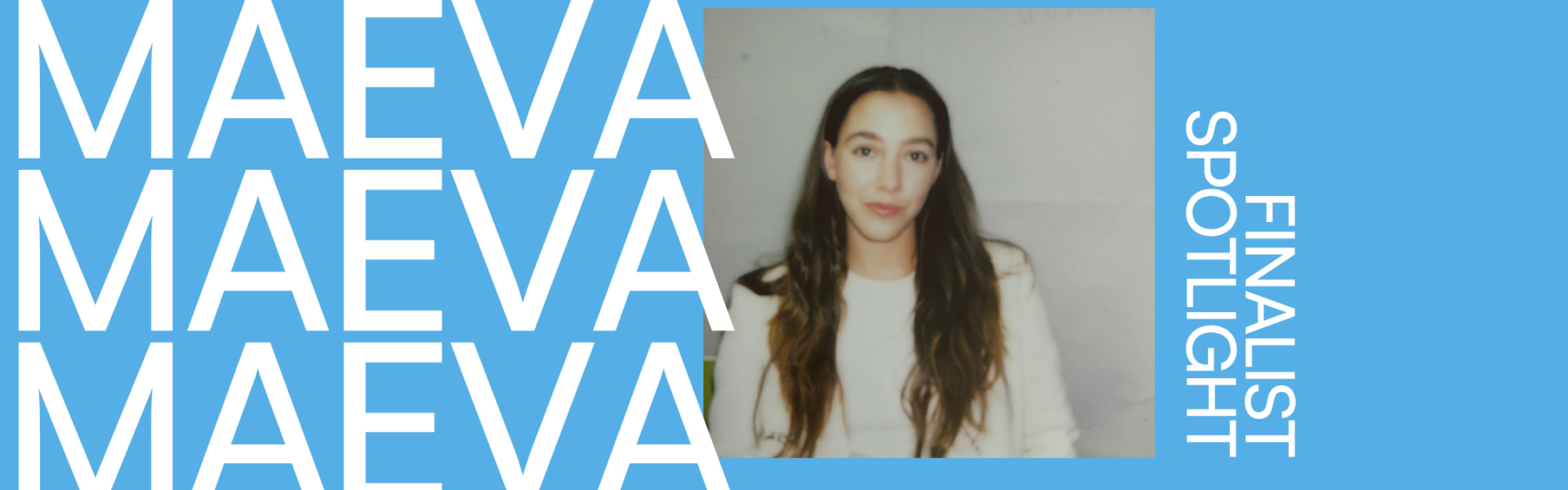
Maeva: Finalist Spotlight
 Team Member Laura Werner Marketing Coordinator & Digital Marketing Strategist Social Impact Award International laura.werner@socialimpactaward.net
1 in 5 women wait up to 10 years for a diagnosis of hormonal disorders such as PCOS or endometriosis. Maeva is an AI-powered companion that helps women understand their hormonal data and reach the correct diagnosis more quickly.
Tell us about your idea: what, how, and why?
Maeva is a digital health companion that helps women identify, understand, and communicate patterns in their health.Too many women live with chronic symptoms without getting clear answers. Many are told that their symptoms are normal, isolated, or not serious enough to investigate. Maeva helps women track relevant daily health information, identify patterns over time, and turn those patterns into clear insights they can discuss with their healthcare providers.Our goal is to help women arrive at appointments feeling more informed, prepared, and confident. Maeva does not replace medical care. It helps make the time women spend with their doctors more productive and helps ensure their experiences are easier to understand and take seriously. Every woman deserves to be heard, diagnosed accurately, and supported with effective care.
What motivated you to start your own project?
It started with the women closest to me. As my friends and I began speaking more openly about our experiences with healthcare, I realised how many had spent years feeling dismissed, misunderstood, or misdiagnosed, especially around hormonal and reproductive health.That made me want to understand whether these experiences were isolated. Over the past year, I have spoken with more than 120 women about their health journeys. While every story was different, the same themes kept emerging: women often felt they had to repeatedly prove that something was wrong before they were taken seriously.I did not want to only feel frustrated by the problem. I wanted to build something practical that could help women document their experiences, recognise patterns, and advocate for themselves. That is what led to Maeva.
How did your impact journey begin?
My impact journey began long before I knew the term social entrepreneurship. As the oldest sibling, I naturally became the person who looked out for others. Whether it was standing up for a classmate as a child or helping a neighbour when they needed support, I have always found it difficult to see someone struggle and do nothing.I never had a master plan to become a social entrepreneur. It has always been more of an instinct. When I see a problem affecting people around me, I want to understand it and help create a solution. Maeva is that instinct applied to a larger problem. It is my way of turning a personal drive to advocate for others into action against a systemic issue that affects so many women.
What have you been most excited about in the incubation process?
The community has been the most energising part of the incubation process. Building a company can be challenging and sometimes isolating, especially when you are working on a complex issue like healthcare. Being surrounded by other purpose-driven founders has been incredibly motivating.What I value most is the exchange of perspectives. Every team is approaching impact differently, whether through technology, education, sustainability, community, or policy. Those conversations consistently challenge me to think more creatively about Maeva.I often leave a conversation with another founder with a new idea, a better question, or a clearer perspective on how to strengthen the product and scale its impact.
If you had all the resources in the world, what would you change?
I would work to close the global gap in health equity.Where someone is born, their income, gender, race, or background should not determine whether they are believed, diagnosed early, or able to access effective treatment. Yet these factors still shape health outcomes in profound ways.For me, health equity is not only about access to care. It is also about who is represented in research, whose symptoms are understood, who is listened to in clinical settings, and who has the tools and information to advocate for themselves.
Good health should not be a privilege. It should be a baseline human right.